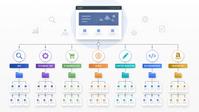
Local SEO is no longer a small add-on for businesses that happen to serve a particular town or city. For a plumber, dentist, restaurant, solicitor, accountant, agency, retailer, contractor, healthcare provider, or any other location-dependent business, local search can be one of the clearest paths between online discovery and real-world action.
When someone searches for a service “near me,” adds a city to a query, checks a map, compares reviews, or looks for opening hours before visiting a business, the search has a strong local component. The challenge is that simply adding a city name to a page is not enough. A useful local SEO strategy connects accurate business information, relevant pages, strong site architecture, local relevance, customer trust, technical SEO, and measurable conversion paths.
This guide explains how to build that system from the ground up. It is designed for small and growing businesses that want a practical framework rather than a list of isolated SEO tricks.
What Is Local SEO?
Local SEO is the practice of improving a business’s visibility when people search for products, services, or businesses associated with a specific geographic area. It includes the business website, local business information, search listings, location-focused content, reviews, links, structured data, and the overall experience a potential customer receives before making contact.
Traditional SEO often asks, “How can this page satisfy a search query?” Local SEO adds another question: “How can search engines and customers understand where this business operates and whether it is relevant to this particular place?”
That distinction matters because local intent can be explicit or implicit. A query such as “emergency electrician in Leeds” clearly names a location. A query such as “emergency electrician near me” communicates geographic intent through context. A search for a specific business name can also lead to local actions such as directions, calls, opening-hours checks, or website visits.
Why Local SEO Matters for Small Businesses
Small businesses often compete against larger companies with bigger content budgets, stronger domains, and more marketing resources. Local SEO can create a more focused opportunity because relevance is not determined only by general authority. The business’s actual service area, location, customer experience, website information, and local reputation all matter.
Consider a person who needs a kitchen installer. They are unlikely to value a generic article about kitchens as much as a trustworthy local company that clearly explains its services, serves their area, displays useful project information, and makes it easy to request a quote. Local SEO helps the website communicate that relevance.
There is also a valuable connection between discovery and conversion. Local searches can lead to actions such as phone calls, directions, bookings, quote requests, store visits, or contact-form submissions. That means a local SEO programme should not be measured only by ranking positions. It should be connected to business outcomes.
Local SEO vs Traditional SEO
The foundations overlap. Both require useful content, crawlable pages, sensible information architecture, good performance, descriptive metadata, internal links, and a strong user experience. The difference is the geographic layer.
- Traditional SEO: focuses primarily on satisfying search intent and building organic visibility around topics and queries.
- Local SEO: adds geographic relevance, business identity, service areas, local trust signals, and location-based customer journeys.
- Local search experience: often includes maps, business profiles, reviews, calls, directions, opening hours, and other actions beyond a standard website visit.
A mature strategy therefore does not treat local SEO as a completely separate marketing channel. It integrates local relevance into the wider SEO and content system.
Start With a Clear Service-Area Strategy
Before creating location pages, define where the business genuinely operates. This sounds simple, but it prevents one of the most common local SEO mistakes: producing dozens or hundreds of thin pages for locations that the company does not meaningfully serve.
Document the primary location, nearby areas, towns, cities, districts, or regions that are genuinely relevant. Then group them according to the actual business model. A company with a physical storefront may have a tight local radius. A service-area business may travel across multiple towns. A national company with regional teams may need a different architecture altogether.
The important point is that the website should reflect reality. Location targeting should support customers, not exist purely to manufacture pages for search engines.
Build Location Pages That Deserve to Exist
A location page should answer more than “Do you serve this city?” A useful page explains the relationship between the business and the location.
Depending on the business, a strong location page might include:
- The services available in the area.
- How customers in that area can contact or book the business.
- Relevant travel, service, delivery, or coverage information.
- Examples of projects or work genuinely completed in the area.
- Frequently asked questions that are useful to local customers.
- Relevant local considerations that affect the service.
- Links to related service pages and supporting resources.
A location page should not be a template where only the city name changes. Search engines and users have little reason to value twenty pages that say essentially the same thing. Invest in pages where there is a meaningful audience and useful information to provide.
Understand Search Intent Before Choosing Keywords
Keyword research for local SEO should start with customer intent rather than a giant list of city names. Think about what the customer is trying to accomplish.
Common local intent patterns include:
- Service intent: “roof repair Manchester”.
- Provider intent: “Manchester roofers”.
- Near-me intent: “roof repair near me”.
- Urgent intent: “emergency roofer open now”.
- Commercial research: “best roof repair company Manchester”.
- Informational local intent: “planning permission for roof extension Manchester”.
These searches may deserve different pages. A service page can explain the offering. A location page can explain geographic coverage. A supporting guide can answer an informational question. Mapping each intent to an appropriate page reduces cannibalisation and produces a cleaner site structure.
Optimise Your Business Information
Consistency is a basic but important part of local search. Business name, address, phone number, opening hours, service information, and other core details should be accurate wherever customers encounter them.
Start with the website. Make it easy to understand who the business is, what it does, where it operates, and how someone can contact it. If there is a physical location, provide appropriate address information. If the business is service-area based, explain the service area accurately rather than pretending that every target city contains a physical office.
Review important business information periodically. Opening hours change. Businesses move. Phone numbers change. Services expand or disappear. A local SEO strategy should include a maintenance process so old information does not remain online indefinitely.
Google Business Profile and Local Discovery
For eligible businesses, a complete and accurate Google Business Profile can be an important part of local visibility. The profile should accurately represent the real business, use the most appropriate business details, and remain consistent with the information customers see elsewhere.
Useful maintenance includes reviewing business categories, services, hours, contact details, photos, and other available information. The objective is not to manipulate the profile with irrelevant keywords. The objective is to make the business easy to understand and easy to act on.
Businesses should also treat their profile as a customer-facing asset. Questions, reviews, photos, updates, and other interactions can affect how customers perceive the business even before they reach the website.
Reviews: Build Trust, Do Not Manufacture It
Reviews are important because customers use them as evidence when deciding whether to contact a local business. A sensible review strategy starts with delivering a good customer experience and making it easy for satisfied customers to leave honest feedback.
Avoid fake reviews, review buying, incentivised manipulation where prohibited, or systems designed to hide legitimate negative experiences. These approaches can damage trust and create policy or reputation problems.
Instead, create a simple operational process. After a completed job, booking, purchase, or service interaction, ask customers for honest feedback. Respond professionally to reviews. Thank customers for positive feedback and address legitimate concerns without becoming defensive.
Review themes can also inform SEO content. If customers repeatedly ask about turnaround time, pricing factors, service coverage, or aftercare, those questions can become useful FAQ or educational content.
Create a Strong Local Content Strategy
Local content should not mean publishing generic articles with city names inserted into the headline. The best local content starts with genuine knowledge about customers, services, and the communities being served.
Useful local content can include:
- Area-specific service guides.
- Local project case studies.
- Customer questions and answers.
- Buying guides for local conditions.
- Service-area explanations.
- Local regulations or practical considerations where relevant.
- Seasonal maintenance guides.
- Comparisons that help customers make a decision.
- Detailed explanations of the business process.
The strongest topics are usually connected to a real customer problem. Instead of asking, “What city keyword can we target?”, ask, “What does a customer in this area need to know before choosing this service?”
Use Internal Linking to Connect Services and Locations
Internal linking is particularly useful when a site contains multiple services and locations. A visitor who lands on a location page should be able to move naturally to the relevant service page. A service guide should be able to point users toward relevant local pages when appropriate.
For example, a property maintenance company could structure its site around:
- Core service pages.
- Location pages.
- Detailed service guides.
- Case studies.
- Frequently asked questions.
Links between these sections help users discover the next relevant resource. They also help search engines understand relationships between pages.
Use descriptive anchor text where it is natural. Avoid forcing exact-match keywords into every link. The link should help the user understand what they will find after clicking.
Build a Logical Local Site Architecture
Site architecture becomes more important as a local business expands. A small site might have only a handful of service pages, while a multi-location organisation can quickly create hundreds of URLs.
Before adding pages, define the hierarchy. For example:
- Services
- Service A
- Service B
- Locations
- Location A
- Location B
- Resources
- Guides
- Case studies
The exact structure depends on the business, but the principle is consistent: important pages should be easy to discover, logically grouped, and supported by relevant internal links.
Technical SEO for Local Websites
Local relevance cannot compensate for a website that search engines cannot crawl or users cannot use. Technical SEO therefore remains part of the local SEO foundation.
Indexation
Check that important service and location pages can be crawled and indexed. Review accidental noindex directives, canonical problems, blocked resources, and orphan pages.
Page Performance
Local visitors may arrive from mobile devices and variable network conditions. Keep pages efficient, reduce unnecessary scripts, optimise images, and monitor real-world performance.
Mobile Experience
A large portion of local discovery happens while people are away from a desktop. Phone numbers, directions, opening hours, booking buttons, and contact options should be easy to find and use on smaller screens.
HTTPS and Security
Serve the site securely and maintain a reliable technical environment. Security and reliability are basic requirements for a professional customer experience.
XML Sitemaps
Maintain a clean XML sitemap containing the URLs that you want search engines to discover and consider. Avoid filling the sitemap with obsolete, redirected, duplicate, or intentionally excluded URLs.
Structured Data and Local Business Information
Structured data can help search engines interpret information about a business and its pages. Depending on the business, relevant structured data may include LocalBusiness and more specific business types, along with appropriate information such as name, address, contact details, opening hours, and other supported properties.
Structured data should describe the visible and accurate information on the page. It should not be used to claim facts that customers cannot verify. Keep markup technically valid and review it after significant website changes.
Structured data is not a substitute for good content. Think of it as an additional layer of machine-readable context rather than a shortcut to rankings.
Optimise Titles and Meta Descriptions
Every important local page should have a clear, descriptive title that communicates the service and, where appropriate, the relevant location. Avoid producing dozens of titles that differ only by a city name while the underlying page content remains identical.
Meta descriptions should explain what a visitor can expect and why the page is relevant. They are primarily a user-facing search snippet rather than a direct ranking lever, so write them for clarity and click usefulness.
Local Link Building Without Spam
Links can support authority and discovery, but local link building should be based on legitimate relationships rather than mass directory submissions or artificial networks.
Potential sources include:
- Local business associations.
- Professional organisations.
- Relevant community organisations.
- Local publications.
- Industry publications.
- Partnerships with complementary businesses.
- Genuine sponsorships and community involvement.
- Useful original research or resources that others naturally reference.
The goal is not to collect the largest possible number of links. It is to build a credible web presence around the business and its expertise.
Common Local SEO Mistakes
Creating Doorway-Like Location Pages
Publishing a large collection of near-identical pages solely to rank for city variations creates little value. Build a page when there is a meaningful customer need and enough unique information to justify it.
Keyword Stuffing
Repeating “best plumber in Birmingham” throughout every heading and paragraph makes content harder to read and does not create a better customer experience. Write naturally and cover the topic comprehensively.
Using Fake Addresses
Do not create artificial office locations to appear closer to searchers. Business information should reflect reality.
Ignoring Conversion Paths
Traffic is not the final goal for most local businesses. If a visitor cannot quickly call, book, request a quote, visit the store, or understand the next step, rankings may not translate into revenue.
Publishing Without Maintenance
Local pages can become outdated. Services change, teams move, opening hours change, and old offers expire. Schedule periodic reviews of high-value local pages.
A Practical Local SEO Workflow
A repeatable workflow makes local SEO easier to manage.
Step 1: Audit the Current Website
Inventory important pages, indexation status, titles, headings, internal links, location information, performance, structured data, and conversion paths.
Step 2: Define Service Areas
Document the places the business genuinely serves and prioritise them based on customers and commercial importance.
Step 3: Map Search Intent
Group keywords and questions into service, location, commercial, urgent, and informational intent. Assign each meaningful intent to an appropriate page.
Step 4: Improve Core Pages
Strengthen service pages and the main location page before creating a large number of new URLs.
Step 5: Build Supporting Content
Create guides, FAQs, case studies, and resources that answer real customer questions and support the core pages.
Step 6: Strengthen Internal Links
Connect relevant pages so users and search engines can move through the site logically.
Step 7: Improve Business Listings and Reviews
Keep business information accurate and establish a legitimate process for requesting and responding to customer reviews.
Step 8: Measure and Iterate
Review search visibility, landing-page traffic, calls, enquiries, bookings, and revenue-related outcomes. Use the data to prioritise the next improvements.
How to Measure Local SEO Performance
Ranking position is useful but incomplete. A local SEO dashboard should connect visibility with customer actions.
Useful metrics include:
- Organic impressions for local queries.
- Organic clicks to service and location pages.
- Non-branded local search visibility.
- Calls generated from organic discovery.
- Quote or enquiry submissions.
- Bookings and appointments.
- Direction requests or store visits where measurable.
- Conversion rate by landing page.
- Revenue or qualified leads attributed to organic search.
Look at trends rather than isolated daily changes. Local search demand can vary by season, day of week, weather, events, and other factors depending on the industry.
How Local SEO Works With Content Marketing
Local SEO and content marketing become more powerful when they share the same information architecture. A service page can target commercial intent. A detailed guide can answer a related informational question. A case study can demonstrate expertise. A location page can explain local availability. Internal links can connect the entire cluster.
This approach creates depth rather than publishing unrelated articles. Over time, the site can become a useful resource around the services and locations that matter most to the business.
How Local SEO Works With AI Search
Search experiences increasingly involve systems that summarise information and help users discover businesses through conversational or generative interfaces. The fundamental response remains the same: make the business information clear, accurate, useful, and well structured.
Use plain language to explain what the business does, who it serves, where it operates, what customers can expect, and how the service works. Support important claims with evidence and useful pages. Keep core information consistent across the website and legitimate business profiles.
Do not treat AI search as a reason to abandon conventional SEO. A technically accessible, well-organised, authoritative website remains a useful foundation.
Local SEO for Multi-Location Businesses
Multi-location businesses need additional discipline because scale creates duplication risk. Each location should have accurate local information and a reason to exist as a separate page.
Use a consistent template for essential information, but provide genuinely location-specific details where available. Examples can include local services, team information, facilities, projects, testimonials, accessibility information, or other useful facts.
Centralise governance for business information while allowing local teams to contribute accurate updates. This helps maintain consistency without making every page identical.
Local SEO for Service-Area Businesses
Service-area businesses require special care because they may serve customers across a region without maintaining a public storefront in every location. The website should clearly communicate the actual service model.
Explain the main base of operations, the areas served, travel considerations, booking process, and any geographic limitations. Do not invent physical locations simply because a keyword appears attractive.
Local SEO for Ecommerce and Hybrid Businesses
An ecommerce business with physical stores or local pickup can combine product SEO with local discovery. Location pages can explain store information, pickup options, services, and local availability. Product pages can link to appropriate store or service information when that helps customers.
The architecture should keep product intent and location intent distinct while allowing them to support one another naturally.
Local SEO Checklist for 2026
Use this checklist as a practical starting point:
- Define the real service area.
- Confirm business name and contact information.
- Review location and service pages.
- Remove or improve thin duplicate location pages.
- Map important keywords to search intent.
- Improve page titles and headings.
- Strengthen internal linking.
- Review indexation and canonical signals.
- Check mobile usability and page performance.
- Maintain an accurate business profile.
- Build a legitimate review process.
- Publish useful local content.
- Add appropriate structured data.
- Earn relevant local and industry links.
- Track calls, enquiries, bookings, and other conversions.
- Review high-value pages regularly.
Frequently Asked Questions About Local SEO
How long does local SEO take?
There is no universal timeline. Results depend on competition, website quality, business reputation, service area, existing authority, content quality, technical health, and the consistency of implementation. Treat local SEO as an ongoing process rather than a one-time submission.
Do small businesses need a large website?
No. A smaller website with excellent service pages, accurate business information, useful local content, strong internal linking, and a good user experience can be more useful than a large website filled with repetitive pages.
Should every town have its own page?
No. Create separate location pages when there is genuine customer value and enough useful information to support them. Avoid mass-producing nearly identical pages.
Are reviews important for local businesses?
Reviews can strongly influence customer trust and local decision-making. Businesses should focus on delivering a good experience, requesting honest feedback appropriately, and responding professionally.
Can a business rank locally without a physical storefront?
Some service-area businesses can appear in relevant local searches without presenting every service area as a physical storefront. The website and business information should accurately describe the operating model.
Should local keywords be repeated throughout a page?
No. Use natural language. Cover the service, location, customer questions, process, and relevant entities thoroughly rather than repeating the same phrase.
Final Thoughts
Effective local SEO is not about adding a city name to a title and waiting for rankings. It is a system for making a business understandable, trustworthy, accessible, and relevant to people searching in a particular area.
Start with the fundamentals: accurate business information, a clear service-area strategy, useful service and location pages, strong internal linking, technically healthy pages, legitimate customer reviews, and content that answers real questions. Then measure what matters to the business—qualified enquiries, calls, bookings, visits, and revenue—not just impressions and rankings.
For small businesses, this approach creates a sustainable foundation. Instead of chasing every new local SEO tactic, build a website and online presence that genuinely helps local customers decide what to do next.